
Lately, it seems when it comes to how we see the world, my teen and I can’t agree on anything.
My parents are out of touch and shut me down if I express my own views.
We used to enjoy each other. Now it feels like it’s just fighting or silence.
As a child and adolescent advocate committed to strengthening families as the source of our children’s resilience, I hear statements like these too frequently. We should feel worried about our families as the world’s tensions lead to divisions among us. We must elevate the sanctity of our relationships above disagreements. We do not need to solve large problems to uphold relationships; we just need to commit to doing so.
We must raise our children to know they are unconditionally loved and deeply valued. Reinforce the centrality of our families as a refuge from a challenging world. These are the roots of lifelong resilience and the foundation of enduring relationships.
There are ways to respectfully disagree while preserving togetherness. Let’s draw from what we know about respectful disagreements from our culture and current thoughts on strength-based parenting.
Take From What We Know
As an ancient people, we can experience almost any challenge and say we have been here before.
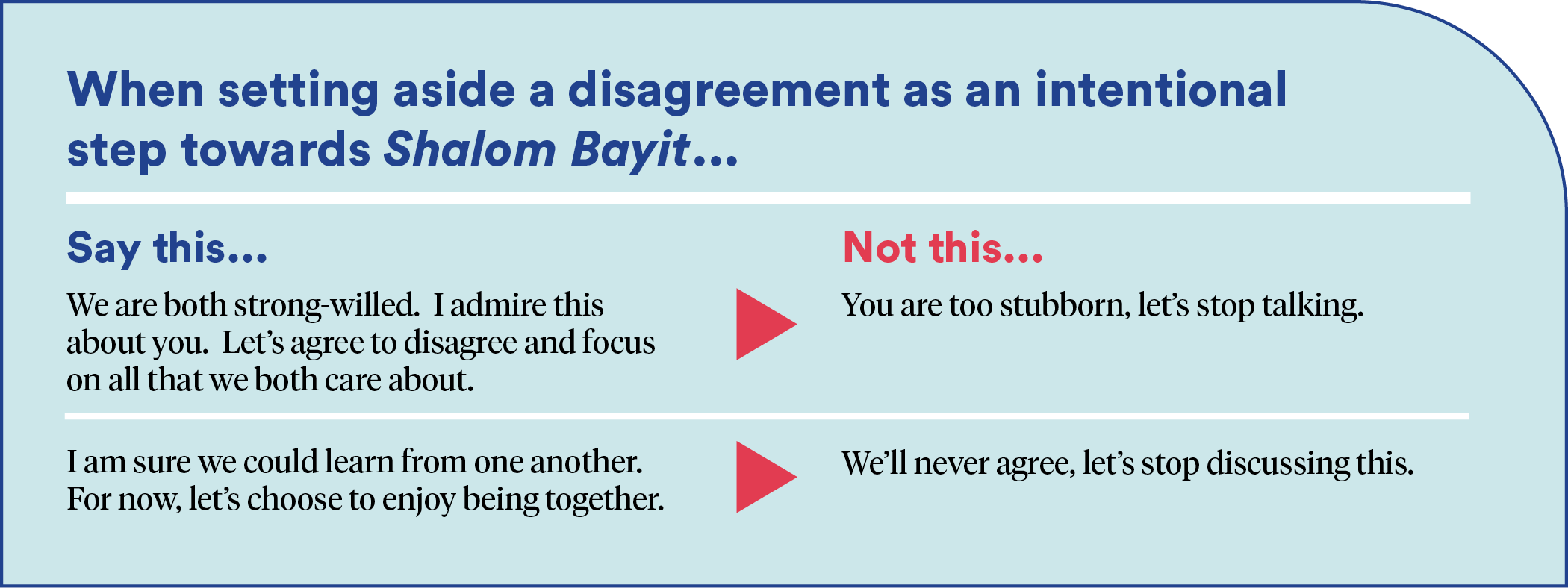
Shalom Bayit. Peace in our homes. Commit to compassion at home and practice forgiveness. If needed, set aside your opinion to preserve relationships.
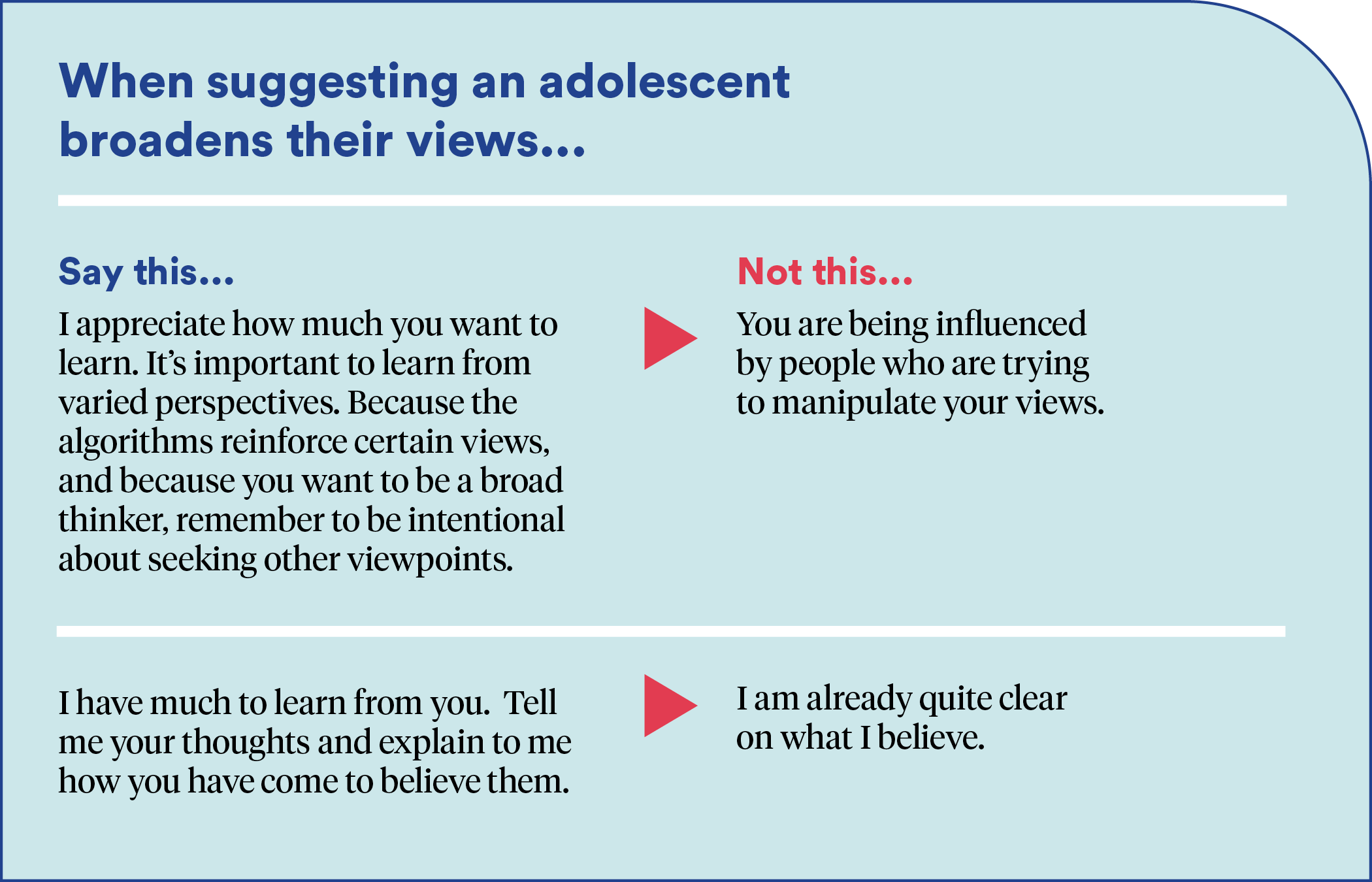
Respectful Disagreement. In the study of Talmud, we are guided to consider the sources of viewpoints to assess context and credibility, but are expected to gain wisdom from varied perspectives. Whether or not you study Talmud, it is in your DNA to listen, explore, learn, and respectfully disagree.
To humbly seek growth. In Ethics of our Fathers (Pirkei Avot; Chapter 4: Mishna 1), Shimon Ben Zoma said: “Who is wise? He who learns from all people.” Learn from teachers, knowing that there's always someone who knows more. Draw from life's lessons. This includes learning from the innate curiosity of children, and from the skepticism, righteous indignation, and idealism of adolescents.
Build on the Strengths of Our Children and Families
Our homes must be sanctuaries where no disagreement could ever undermine the unconditional love for one another. We must be intentional in our commitment to prioritize relationships above all else. The following strategies help you remain unwavering in your commitment to peace at home, especially when it’s tough to ignore conflict.
- Remind yourself why you care. It’s hard to be upset about someone’s opinion unless you value their perspective. The depth of your love makes you care so much when your child disagrees with you. Remind yourself why you love your child. Allow for memories of the moments when you saw who your child really is. Their compassion, sense of fairness, stubbornness, and strong-headedness (like you, maybe?). When they made you smile so hard that it turned into laughter.
- Reject feeling rejected. If you take disagreements personally, you will react defensively. Being defensive is a slippery slope towards becoming offensive. On the offense, you choose to fight rather than choose Shalom Bayit. Your child is not rejecting you by disagreeing with you; they are thinking for themselves.
- Understand we live in different realities. Gone are the days when news anchors earned credibility, and editorial standards ensured accuracy and offered full context. Anyone can share their perspective through social media and create news. This democratizes the news and lets people see things they might not have noticed. But it is also dangerous, as it enrages while avoiding context or nuance. Algorithms feed us what engages us, limiting our viewpoints. Knowing this helps you understand that your child is exposed to a different reality. Guide them to find varied perspectives in an ever-changing media landscape, rather than try to convince them they are wrong.
- Redefine a “win.” Forces in our society hold the cruel view that the only way to win is to ensure someone else loses. To shield ourselves from this approach, understand that a win, even amid sharp disagreements, is achieved when our relationship remains intact, and love is reaffirmed.
Celebrate Your Child
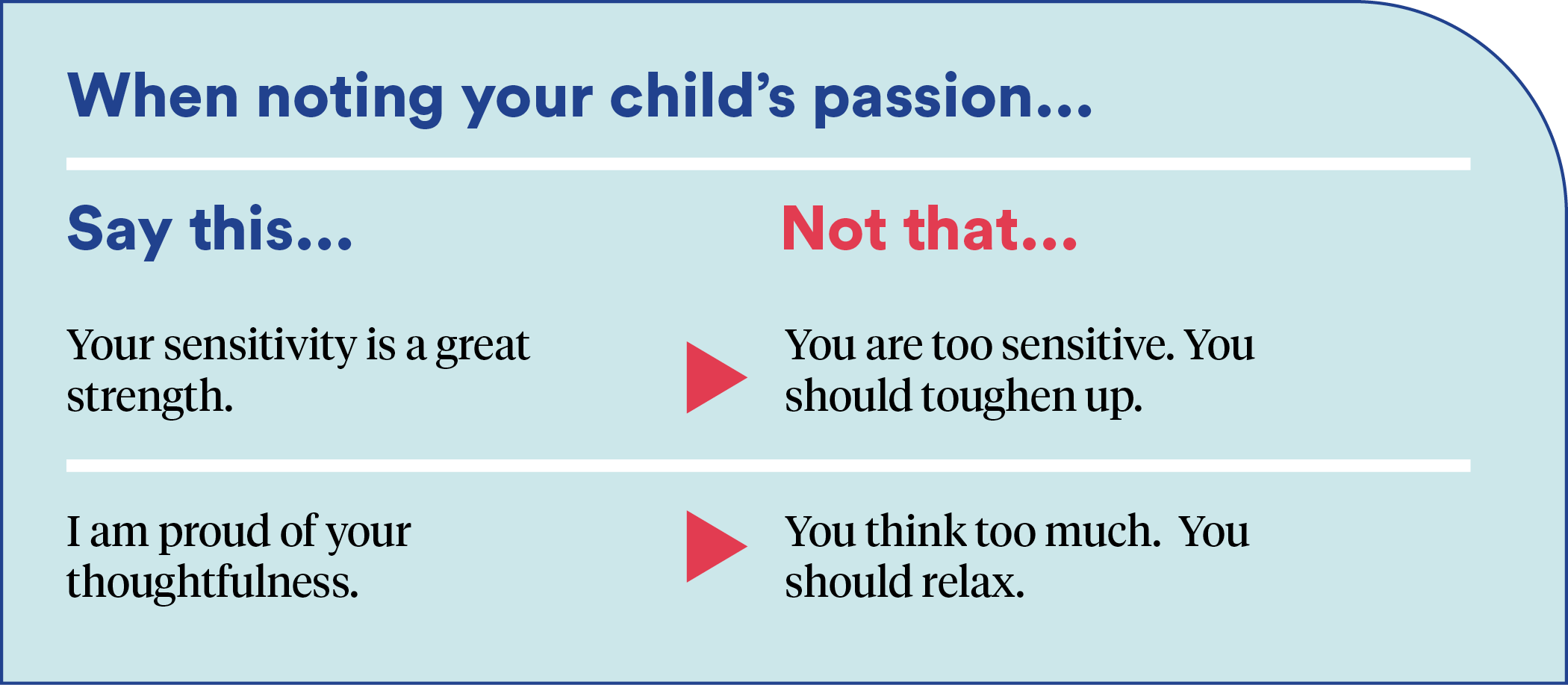
Staying rooted in a strengths-based approach reframes our interactions. Even as we disagree, we remind ourselves of the strengths we witness.
Celebrate Caring
We raise our children hoping they possess sensitivity and thoughtfulness. We take pride in their passion, understanding that with intense caring sometimes comes pain. Our challenge is to guide our children to benefit from the consciousness they possess while lessening the pain that comes with their heightened awareness.
Celebrate Independent Thought
We want our children to stand on their own and make meaningful contributions to the world. Coming to their own set of values and beliefs is a critical step on the journey to independence. At times, that means rejecting your values and pushing you away because they love you so much that they must practice not needing you. While these are hard moments, celebrate them as steps towards independence.
Celebrate a Sense of Belonging
If your child is letting you know how much they care about something – especially if they know you disagree – it is a sign they care about what you think. That reaffirms they know you belong to one another.
Uphold Sanctuary
Allowing even sharp disagreements to unfold shows you’re open to listening and respect your child's passion and thoughts. However, if accusations are hurled or anyone feels distressed, the interaction should cease. An issue can be revisited later after a cool-off period. Or agree to disagree while upholding the value that no outside issue can reduce emotional safety at home.
Tips for Maintaining Relationships Even as We Disagree
General De-escalation Principles
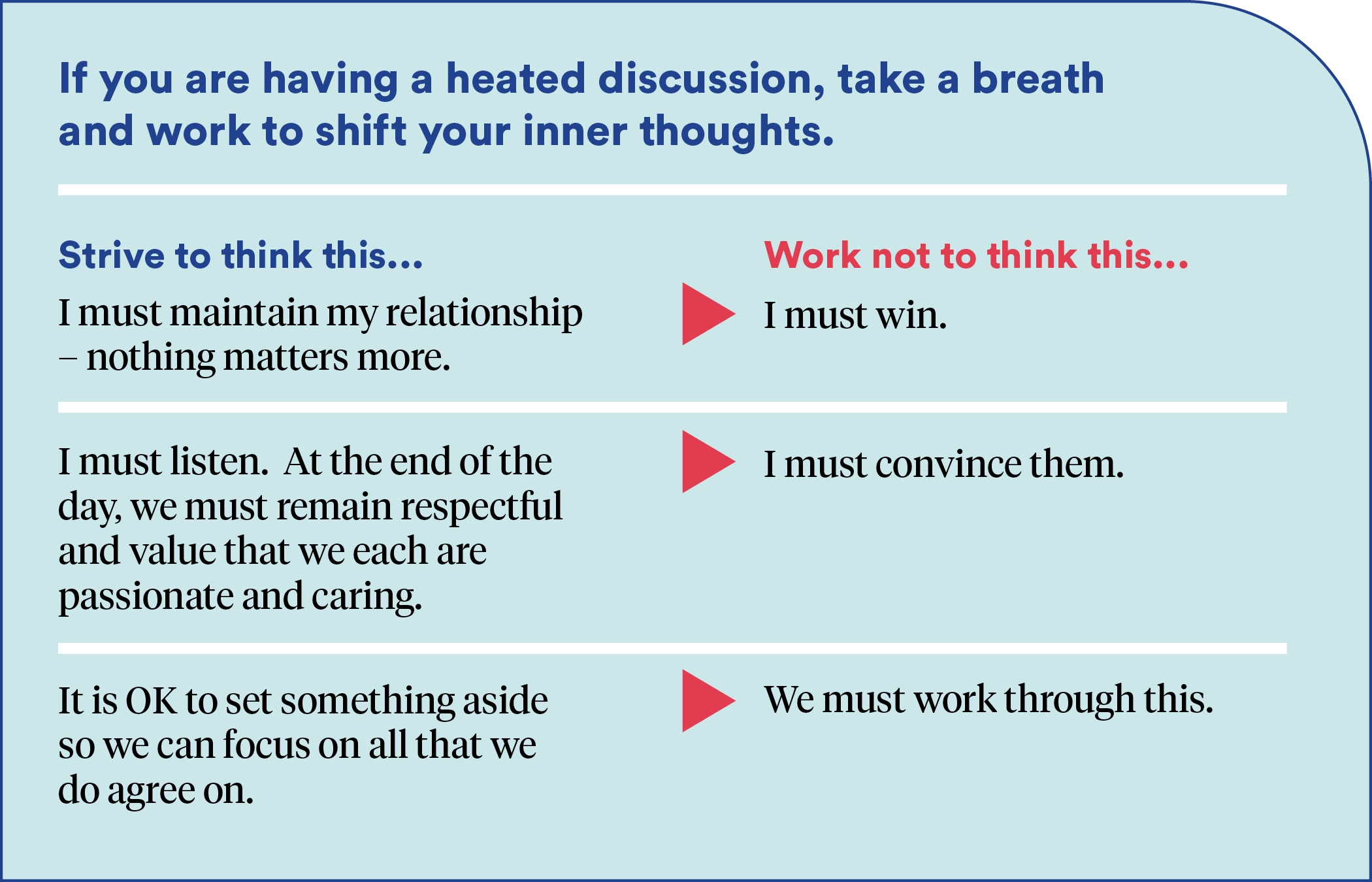
We must protect our relationships with full intention. Stay rooted in these principles.
- Our commitment to loved ones means no disagreement matters more than maintaining the sanctity and emotional safety of our homes.
- Respect others’ views and assume they're rooted in humanity and desire to build a just and compassionate world.
- Even if a loved one holds views in contrast with our own, remember there is likely commonality.
- Honoring another person's different views does not mean they won, and you have lost.
- Setting aside disagreements can be an act of great strength. It says, “No difference between us matters more than our relationship.”
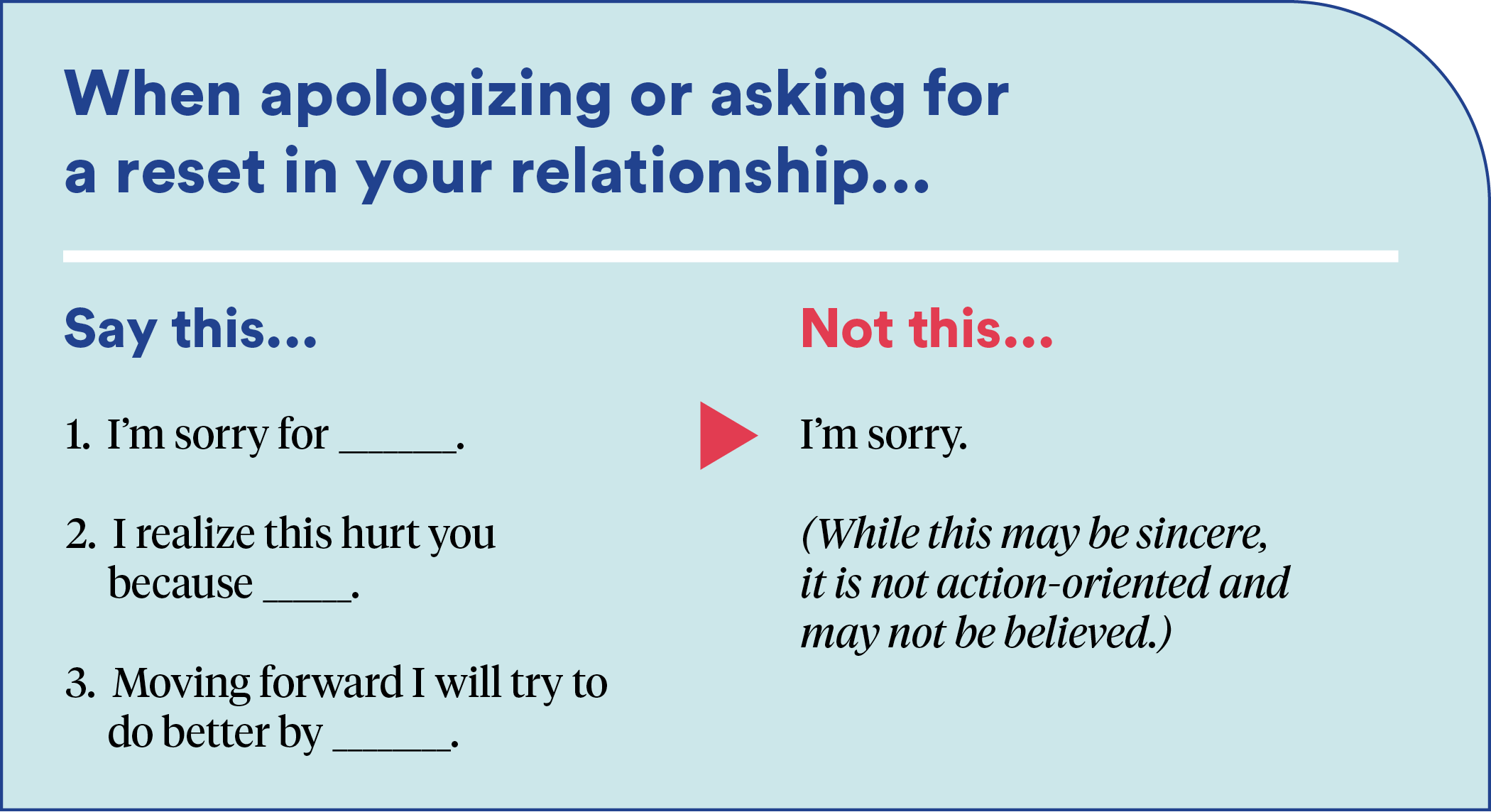
- When stating how you feel, use an “I statement.” When you tell someone “You made me ________” it triggers defensiveness, which leads to anger. Leading with “I need _________,” or “I feel ___________,” activates empathy and a solution-oriented mindset. To de-escalate, say, “Let’s set aside this discussion while I process your thoughts and sit with my reactions. Now, let’s enjoy being together and focus on what we can agree on.”
De-escalation Principles for Adult-Adolescent Interactions
An understanding of adolescent development allows parents to more successfully de-escalate tension amid disagreements.
- The adolescent brain is emotionally heightened and sensitive, and once activated with high emotional content, it can be hard to return to thoughtful conversation. By keeping emotional content at a reasonable level, adolescents can access their thinking powers.
- Remain calm because your emotions (like anger or distress) are contagious.
- Don’t lecture. Limit points to one key concept at a time.
- Avoid condescension or control, as this activates their need to assert independence.
- Recognize adolescents as the experts in their own lives. This doesn’t mean they possess more wisdom than you; rather, it means they understand the world they navigate.
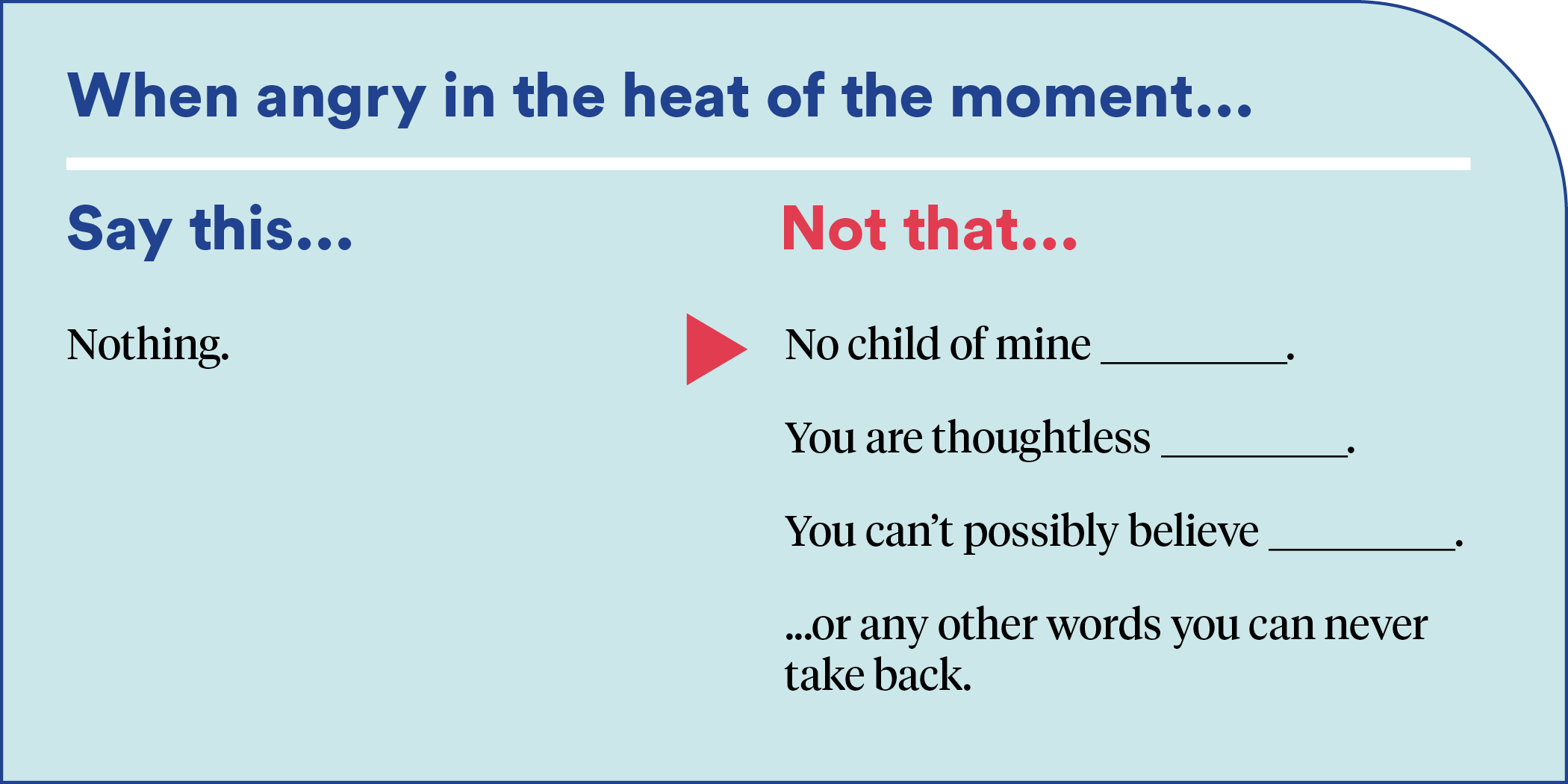
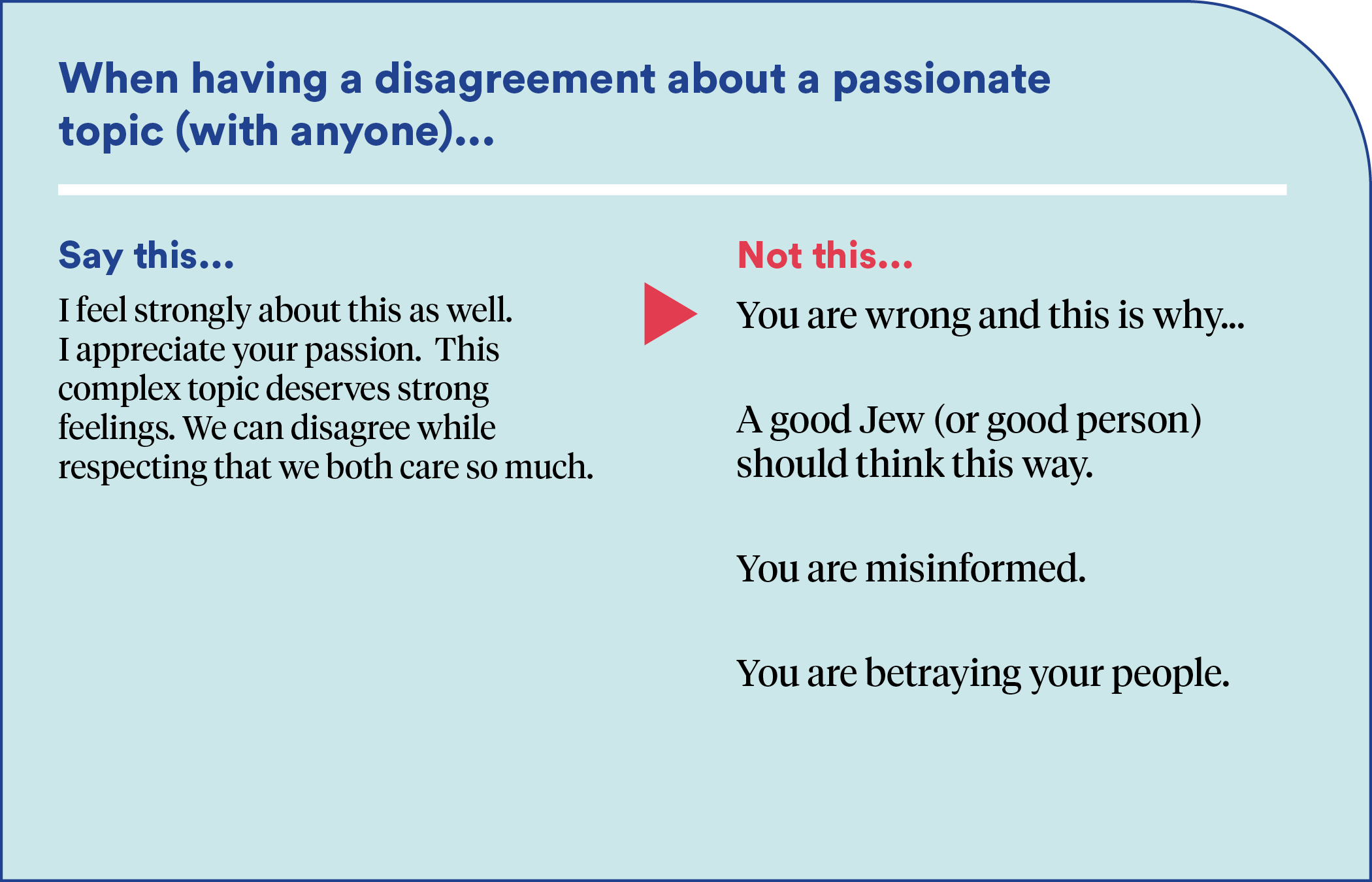
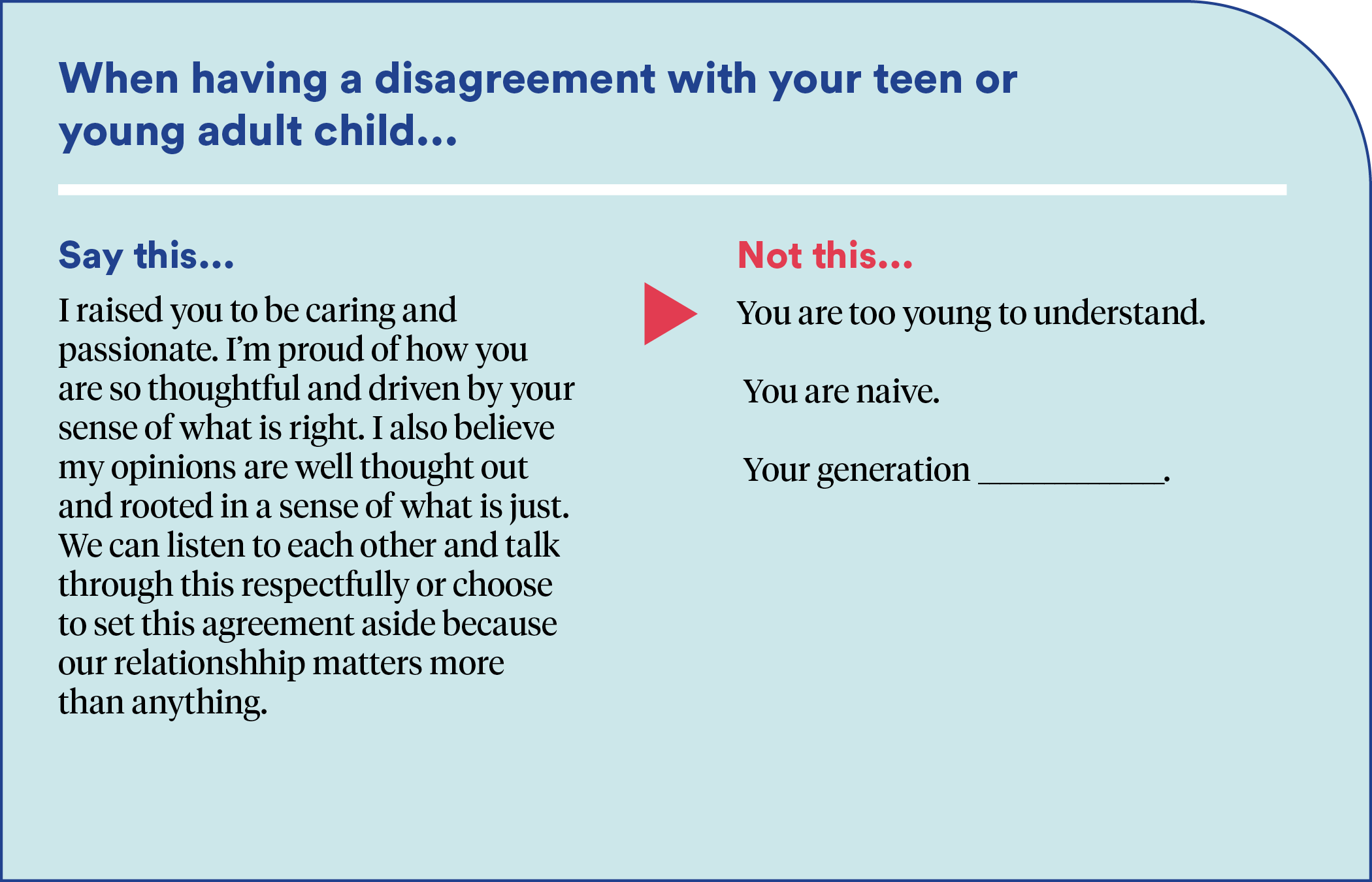
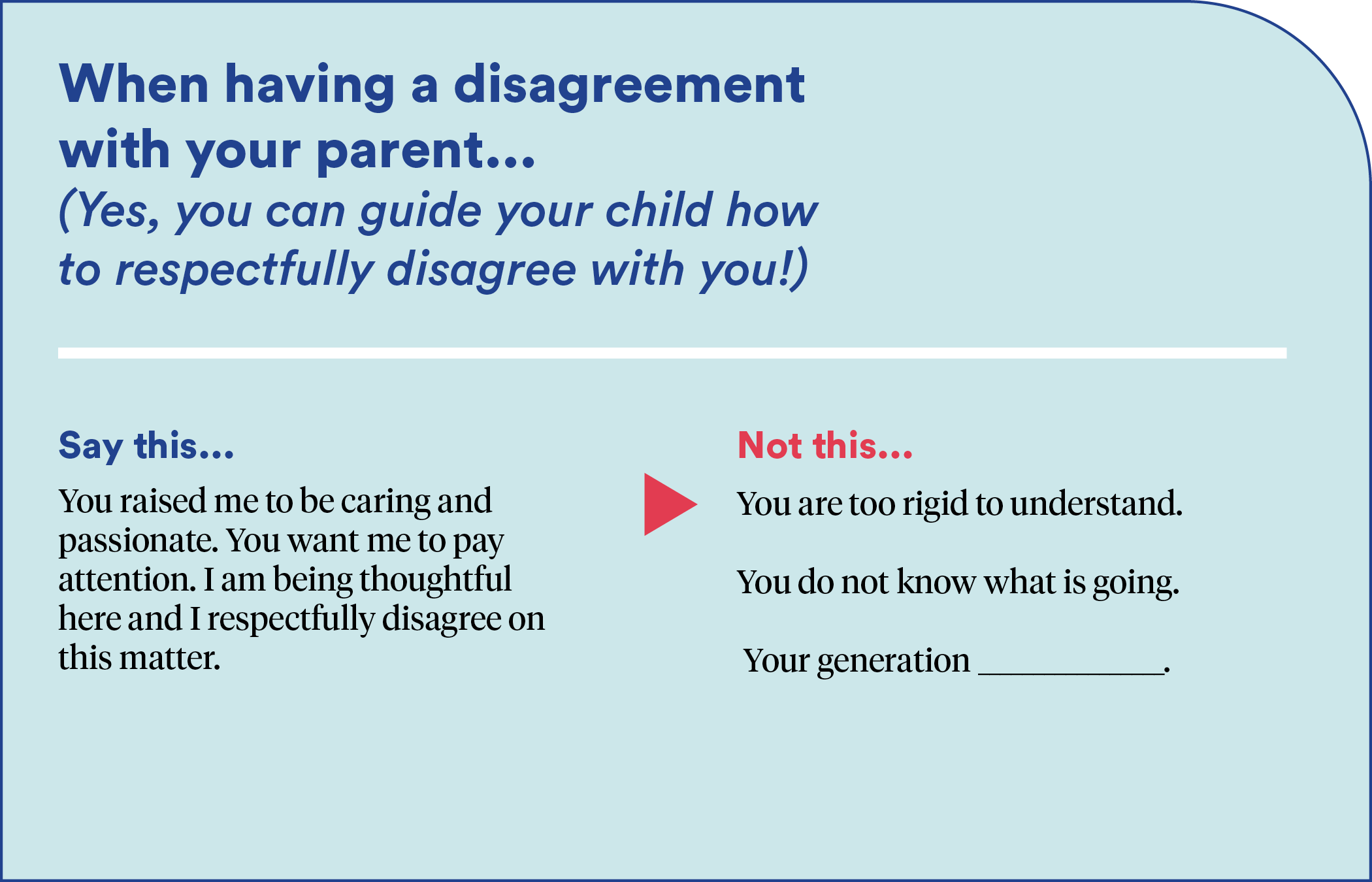
Here are strategies in which we can agreeably differ with one another while preserving relationships.
****
Ken Ginsburg, MD, MS Ed, FAAP, practices adolescent medicine at Children’s Hospital of Philadelphia and is a professor of pediatrics at the University of Pennsylvania Perelman School of Medicine. He is the founding director of the Center for Parent and Teen Communication and has written multiple award-winning books.
This piece is part of a special initiative which aims to equip Jewish teens and families with resilience-building tools rooted in science and Jewish values. It is a collaborative effort of the Jewish Federation of Greater Philadelphia and the Center for Parent and Teen Communication, which works to strengthen all families and to do so in a way that is culturally responsive. For more information, visit the digital resource hub at jewishphilly.org/teen-mental-health.